
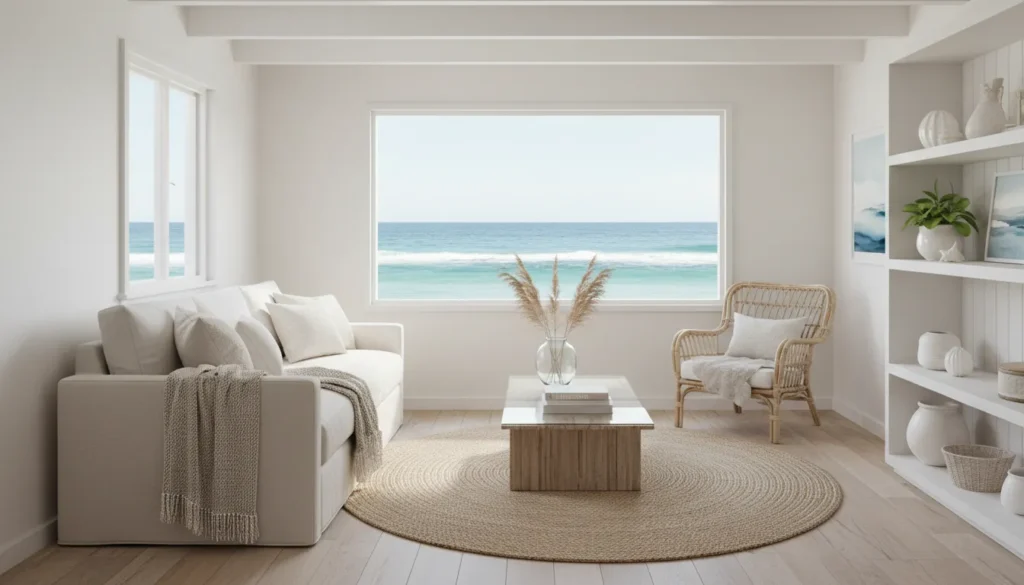
If you have ever stepped inside a small beach cottage and instantly felt at ease — relaxed, unhurried, and somehow at home — you already understand the quiet power of coastal interior design done right. A small beach cottage does not need square footage to feel luxurious. It needs intention. The secret lies in mastering a handful of interior basics that work together to create a space that is airy, functional, and genuinely beautiful. Whether you are decorating a weekend getaway, a rental property, or your full-time seaside home, these seven foundational principles will guide every decision you make — from paint colors and furniture choices to lighting, textiles, and storage. Get these beach cottage interior basics right, and everything else falls naturally into place. This is everything you actually need for a perfect coastal home, simplified and made practical for real spaces and real budgets.
Embrace a Light, Coastal Color Palette
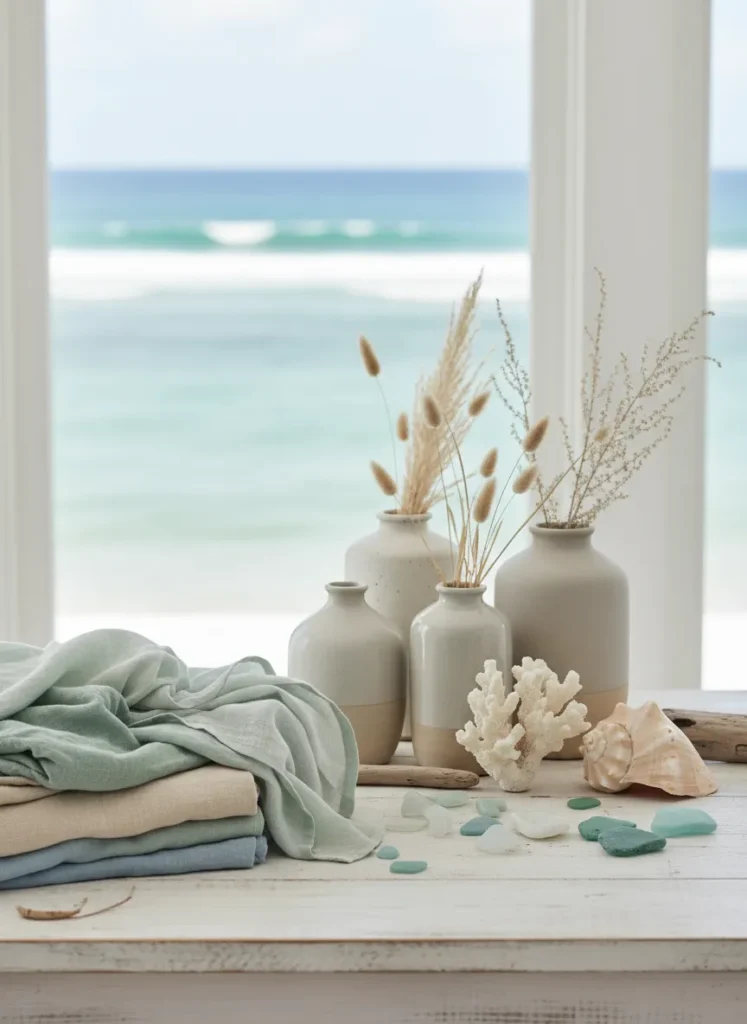
Color is the single most powerful tool in any interior designer’s kit, and in a small beach cottage, it carries even more weight than usual. The right palette can make a compact room feel twice its actual size, while the wrong one can make even a generously proportioned space feel dark, heavy, and closed-in. The foundation of any successful coastal home interior begins with color, and the guiding principle is simple — keep it light, keep it natural, and keep it connected to the world just outside your windows.
The classic beach cottage color palette draws directly from the natural coastal environment. Think the soft white of sea foam, the warm grey of weathered driftwood, the pale blue of shallow tidal water, the sandy beige of sun-bleached shoreline, and the muted green of sea grass swaying in a salt breeze. These are not trendy colors that will date quickly — they are timeless tones rooted in nature, which means they will remain fresh and relevant season after season, year after year.
For walls, crisp white or soft off-white is the most reliable choice in a small beach cottage interior. White walls reflect natural light beautifully, making rooms feel brighter and more open. They also serve as a neutral backdrop that allows furniture, textiles, and accessories to speak clearly without visual competition. If pure white feels too stark for your taste, warm it slightly with a hint of cream or linen — the resulting tone will feel softer and more welcoming while maintaining the same space-expanding quality.
Accent colors should be introduced thoughtfully rather than liberally. Coastal blue in varying depths — from pale sky blue to deeper navy — works beautifully as an accent when used on a single feature wall, in soft furnishings, or in decorative accessories. Soft sage green and faded terracotta also complement the core palette well, bringing organic warmth without disrupting the overall sense of calm. The key is restraint. In a small beach cottage, a limited palette applied consistently across all rooms creates a cohesive, flowing quality that makes the space feel larger and more intentional than a multi-color approach ever could.
Paint finishes matter too. For walls, a matte or eggshell finish absorbs light softly and minimizes the appearance of imperfections — important in older cottages with characterful but uneven plasterwork. For woodwork, trim, and cabinetry, a satin or semi-gloss finish reflects slightly more light and is easier to wipe clean, a practical consideration in any seaside home where salt air, sand, and damp feet are daily realities.
Choose Furniture That Is Functional and Scaled Correctly
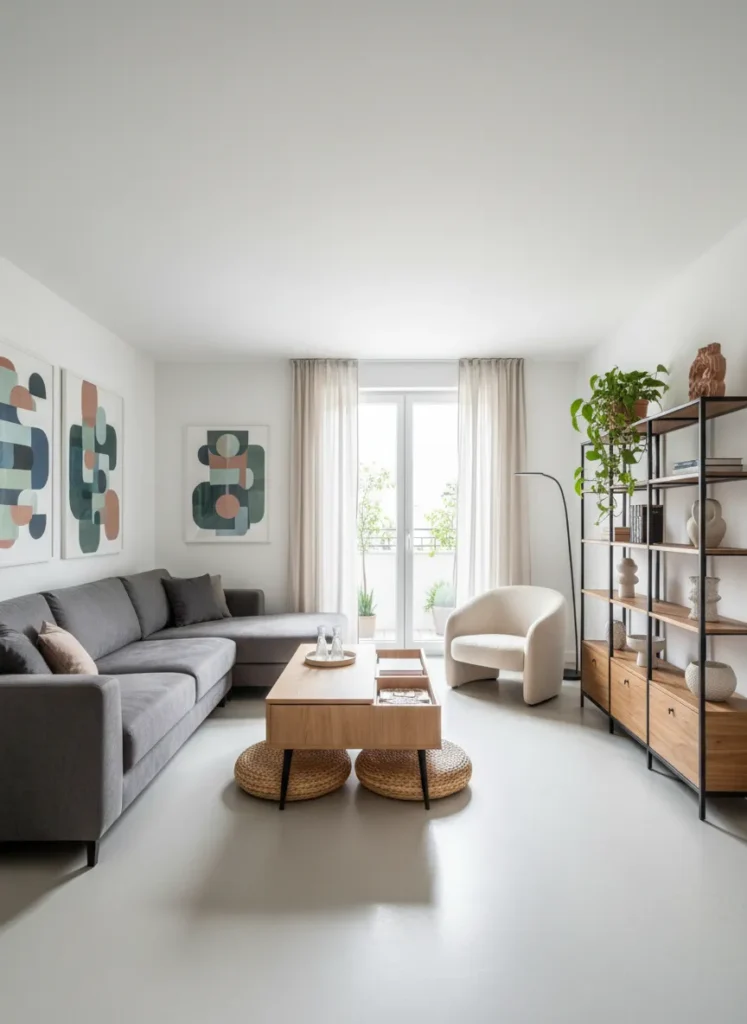
One of the most common mistakes made in small beach cottage interiors is choosing furniture that is simply too large for the space. An oversized sofa that dominates a living room, a dining table that leaves no room to pull out chairs, a bed that fills a bedroom wall to wall — these are the choices that make small rooms feel cramped, cluttered, and uncomfortable. In a coastal cottage, furniture must earn its place by being appropriately scaled, genuinely functional, and visually lightweight.
The concept of visual weight is crucial in small-space design. A piece of furniture with visible legs — a sofa raised on slender wooden legs, a coffee table with a hairpin leg frame, chairs with tapered feet — appears lighter and less imposing than the same piece skirted to the floor. Light passes underneath raised furniture, creating visual breathing room that makes the space feel more open. This principle applies across every furniture category, from dining chairs and side tables to bedroom dressers and console units.
In a small beach cottage living room, a mid-sized sofa in a light, neutral upholstery fabric paired with one or two accent chairs is almost always more successful than a large sectional. Add a round or oval coffee table rather than a square or rectangular one — rounded forms feel gentler in small rooms and allow easier movement around them. A small side table beside each seating piece keeps drinks and books within reach without requiring a larger central table.
For beach cottage bedrooms, choose a bed frame with a simple, streamlined headboard rather than an elaborate upholstered one that visually compresses the room. Under-bed storage drawers or simple bed risers that allow storage beneath the frame are practical solutions that eliminate the need for additional bedroom furniture. A single chest of drawers and one bedside table per person is typically sufficient — resist the urge to fill every wall with furniture simply because you have the wall space available.
In the dining area, a round table seats the same number of people as a rectangular one of similar dimensions but feels less rigid and allows more flexible traffic flow around it. Folding or stackable chairs are a sensible investment in a beach cottage that sees fluctuating numbers of guests throughout the season — store extras in a closet or on a covered porch and bring them out only when needed.
Natural materials are the most authentic choice for coastal cottage furniture. Weathered wood, rattan, wicker, bamboo, and linen-covered upholstery all have an organic warmth that feels genuinely connected to the coastal environment. Avoid heavy, ornate furniture with dark stains and elaborate detailing — it works against the relaxed, breezy quality that defines successful beach cottage interior design.
Get the Lighting Right for Every Mood
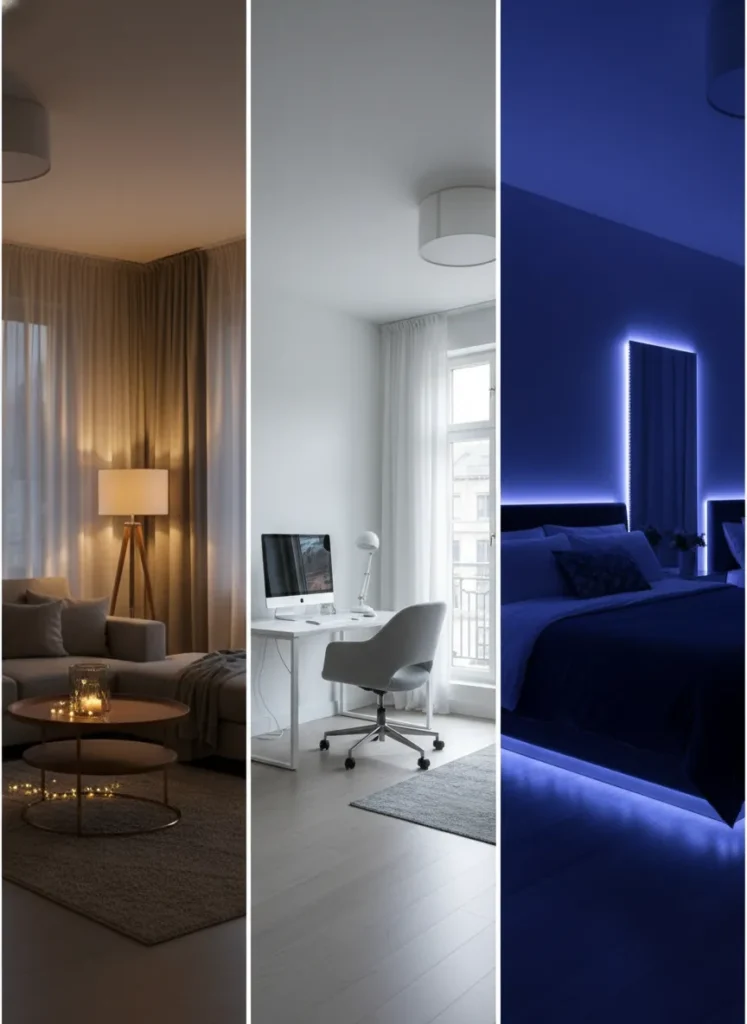
Lighting is one of the most overlooked elements of small beach cottage interior basics, yet it has a profound impact on how a space feels at every hour of the day. Good lighting design in a coastal cottage works on two levels simultaneously — it maximizes the natural light available during the day and creates a warm, layered atmosphere through artificial light in the evenings.
Natural light is your greatest asset in a beach cottage, and every design decision should support and amplify it. Keep window treatments minimal — sheer linen curtains, simple Roman shades in a light fabric, or wooden shutters that fold back completely during the day. Avoid heavy drapes that block light even when drawn open, and never cover windows with furniture or oversized plants that compete for the same light source. If privacy is a concern, sheer curtains at the lower half of a window allow light in while obscuring the view from outside — a simple solution that solves both problems elegantly.
Mirrors are one of the most effective tools for amplifying natural light in small spaces. A large mirror positioned on a wall opposite a window reflects the view and the light back into the room, effectively doubling the visual sense of brightness and space. In a small beach cottage, a well-placed mirror can transform a dark corner into a luminous focal point. Choose frames in natural materials — driftwood, whitewashed timber, rope-wrapped rattan — to keep the look consistent with the coastal aesthetic.
For artificial lighting, the layered approach always produces the best results. Every room in a beach cottage benefits from three types of light working together: ambient light that provides overall illumination, task light that supports specific activities like reading or cooking, and accent light that highlights decorative features and adds atmosphere. A single ceiling fixture providing only ambient light produces flat, unflattering illumination that makes rooms feel institutional rather than inviting.
In the living room, combine a central pendant light or ceiling fixture with table lamps on side tables and perhaps a floor lamp beside the reading chair. In the kitchen, under-cabinet task lighting supplements overhead fixtures and makes food preparation safer and more enjoyable. In bedrooms, bedside table lamps or wall-mounted reading lights eliminate the need to cross a dark room to reach a light switch — a small practical detail that makes a meaningful difference in everyday comfort.
Warm-toned bulbs — those with a color temperature around 2700K to 3000K — create the golden, relaxed atmosphere that is synonymous with beautiful coastal cottage evenings. Avoid cool white or daylight bulbs in living and sleeping spaces, as they produce a harsh, clinical light that works against the warmth and softness that beach cottage interiors should always project.
Layer Textiles for Texture, Comfort, and Coastal Character
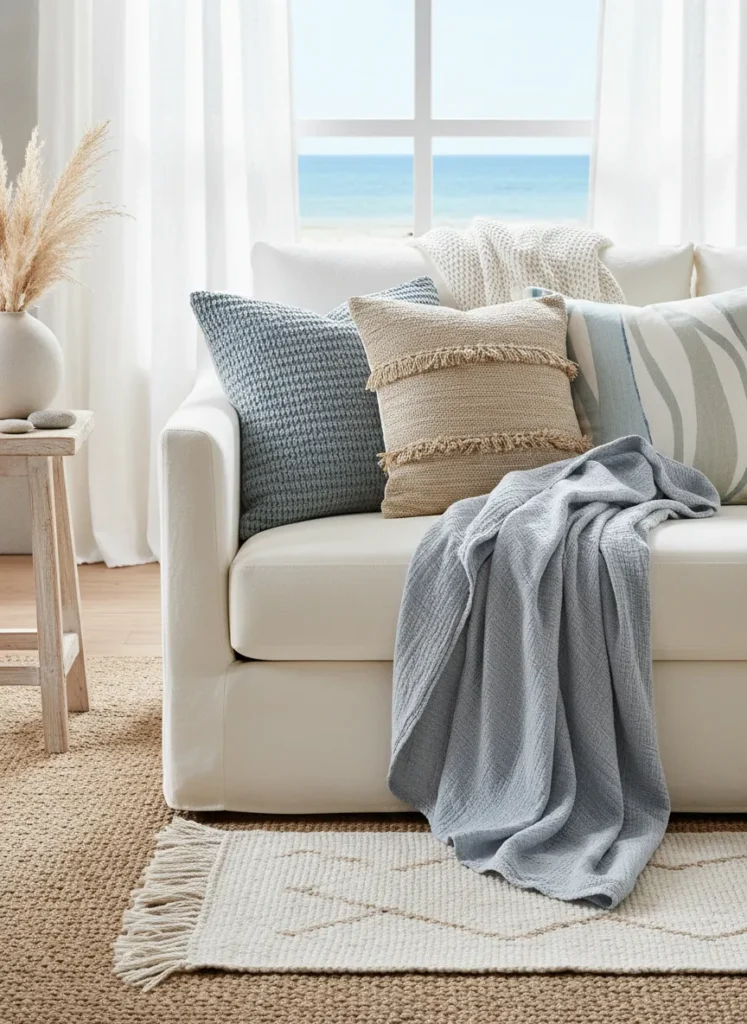
Textiles are the element that transforms a house into a home, and in a small beach cottage, they play a particularly important role in establishing atmosphere, adding color, and creating the layered, lived-in quality that makes coastal spaces feel so genuinely inviting. The right combination of rugs, cushions, throws, curtains, and bedding can completely change the character of a room without moving a single piece of furniture.
The foundation of coastal cottage textile design is natural fiber. Linen, cotton, jute, sisal, seagrass, and canvas are all authentically connected to the maritime world and age beautifully in a seaside environment. They breathe well in warm weather, launder easily — an important consideration when sandy feet and salty skin are constants — and develop a pleasing softness with repeated use and washing. Avoid synthetic fabrics where natural alternatives are available, as they tend to look and feel less authentic in a beach cottage context.
Rugs anchor seating arrangements and define zones within open-plan spaces — both important functions in a small beach cottage where rooms often serve multiple purposes. A natural fiber rug in jute, sisal, or seagrass works beautifully in living and dining areas, adding texture without visual weight. Layer a smaller, softer rug on top for added comfort underfoot — a cotton dhurrie or a simple flat-weave wool rug in a coastal stripe or geometric pattern adds color and softness while the natural fiber base grounds the arrangement.
Cushions and throws are the easiest and most affordable way to update the look of a beach cottage interior seasonally or as your tastes evolve. Build a cushion collection around a core neutral — white, natural linen, or pale grey — then add accent pieces in coastal tones such as navy stripe, faded blue, soft sage, or sandy terracotta. Mix textures freely — a chunky woven cushion beside a smooth linen one beside a printed cotton one creates visual interest that a single fabric repeated cannot achieve.
For bedding, simplicity and quality are the governing principles. A crisp white duvet cover with textural pillow shams in a natural linen creates the kind of clean, hotel-quality look that photographs beautifully and feels genuinely luxurious to sleep in. Layer a lightweight cotton blanket at the foot of the bed for cooler evenings, and add one or two accent cushions in a coastal print during the day. Resist the urge to over-accessorize the bed — in a small beach cottage bedroom, restraint always reads as sophistication.
Solve Storage Smartly to Keep the Space Uncluttered
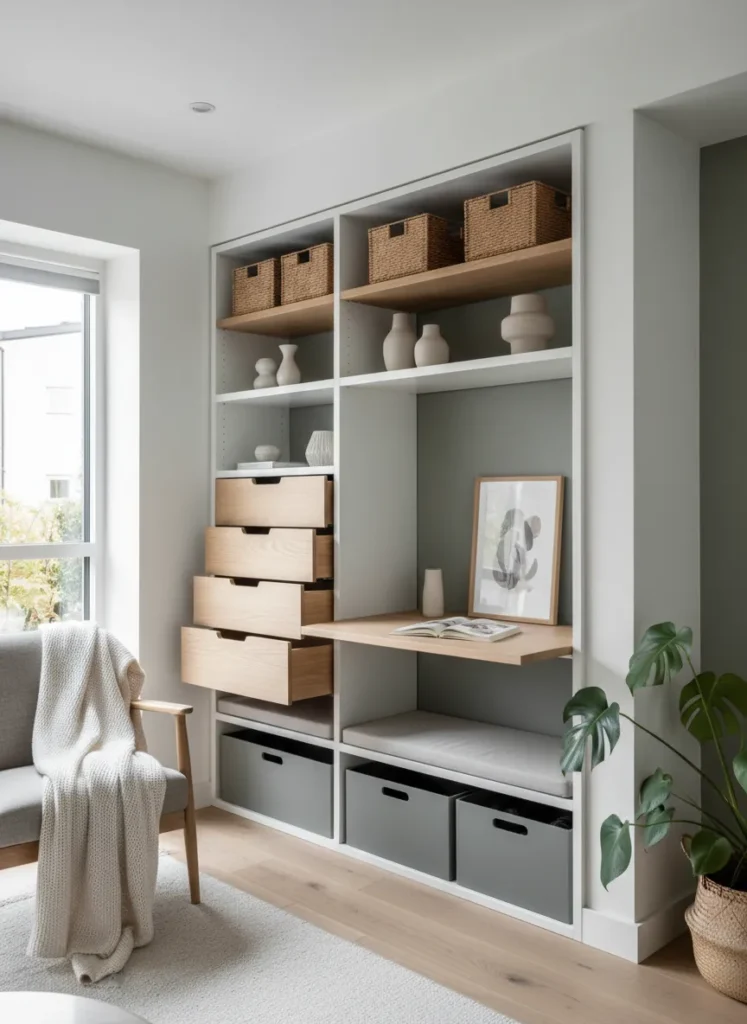
In a small beach cottage, storage is not a luxury — it is a necessity. Without thoughtful, well-planned storage solutions, even the most beautifully decorated coastal space quickly becomes cluttered, cramped, and stressful to inhabit. The fundamental goal of beach cottage storage design is to find a home for everything that needs to be stored while keeping the visual environment as clean and uncluttered as possible.
Built-in storage is the most space-efficient solution available in any small home, and it is worth prioritizing in a beach cottage renovation or upgrade project. Built-in shelving on either side of a fireplace, built-in window seats with hinged lids concealing deep storage below, built-in wardrobes that use the full ceiling height, and built-in kitchen cabinetry that covers an entire wall — these solutions use every available inch of space without encroaching on floor area or creating the visual clutter that freestanding furniture can generate.
Where built-ins are not practical, choose freestanding storage pieces that serve multiple functions. An ottoman with internal storage serves as a coffee table, extra seating, and a storage chest simultaneously — a genuinely useful combination in a small beach cottage living room. A bench at the foot of the bed with a hinged seat provides accessible storage for extra blankets and pillows while serving as a dressing stool. A kitchen island on castors provides additional counter space, storage, and can be moved aside when more floor space is needed.
Vertical storage is consistently underused in small spaces. Shelving mounted high on walls — above doorways, above windows, spanning the full width of a wall near the ceiling — keeps floor space clear while providing meaningful additional storage capacity. In a beach cottage, open shelving styled with a combination of practical storage baskets and decorative objects creates a display that is both functional and visually appealing.
For the practical realities of coastal living — wet swimwear, sandy beach bags, sun-bleached hats, flip-flops, and beach towels — a dedicated entry storage zone makes a meaningful difference to everyday life. A row of hooks beside the door, a slatted wooden bench where wet gear can dry, a large basket for sandy items that need to stay outside, and a small mat for sandy shoes keeps the rest of the cottage clean and organized with minimal effort.
Bring the Outdoors In with Natural Coastal Elements
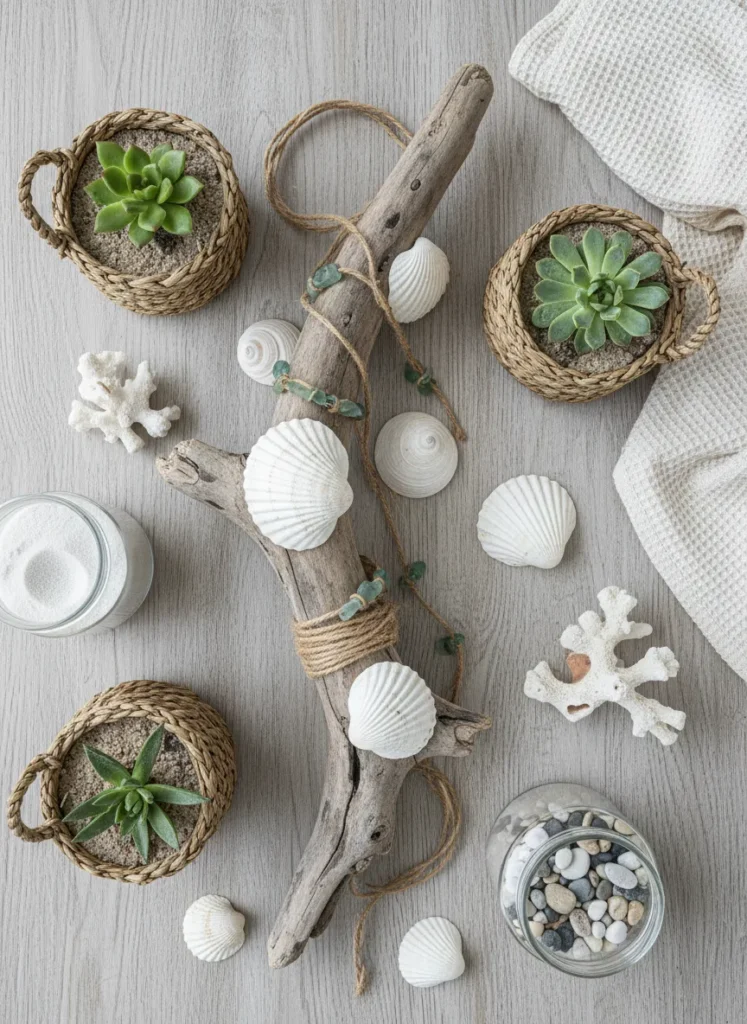
The most authentic and memorable small beach cottage interiors always maintain a strong, tangible connection to the natural world outside. This does not mean filling every surface with seashells and starfish — the overtly nautical, souvenir-shop approach to coastal décor quickly looks clichéd and feels disconnected from the genuine character of seaside living. Instead, it means thoughtfully incorporating natural materials, organic textures, and living elements that speak quietly but clearly of the coastal environment.
Driftwood is one of the most versatile natural materials available for beach cottage interior decoration. A single piece of beautifully weathered driftwood displayed on a shelf or mantelpiece has a sculptural quality that no manufactured object can replicate. Larger pieces can serve as curtain rods, table bases, or freestanding decorative installations. The grey-silver tones of driftwood complement the coastal color palette perfectly, and its organic, irregular form adds the kind of natural authenticity that immediately grounds a space in its seaside setting.
Natural stone — pebbles, sea glass, and smooth coastal rocks — can be incorporated into beach cottage interiors in numerous simple but effective ways. A glass bowl filled with sea glass on a coffee table, a collection of smooth pebbles arranged on a bathroom shelf, or a single striking rock used as a bookend all add texture and natural beauty without requiring significant investment or effort. These small details accumulate into an atmosphere that feels genuinely connected to place.
Living plants are essential in any beautiful interior, and in a beach cottage, they bring life, color, and fresh air to spaces that might otherwise feel static. Choose plants that thrive in the bright, sometimes humid conditions typical of coastal homes — succulents, air plants, spider plants, pothos, and rubber plants all perform well and require minimal care. Large-leafed tropical plants bring a lush, resort-like quality to beach cottage living rooms, while small herb plants on a kitchen windowsill are both decorative and genuinely useful.
Woven natural textures — rattan lampshades, seagrass baskets, jute placemats, bamboo blinds, wicker furniture — build the layered, organic quality that distinguishes an authentically coastal cottage interior from a generic beige room with beach-themed accessories. These materials age gracefully, develop character with use, and maintain their visual appeal across many years and design trends.
Create Outdoor Living Space That Extends the Interior
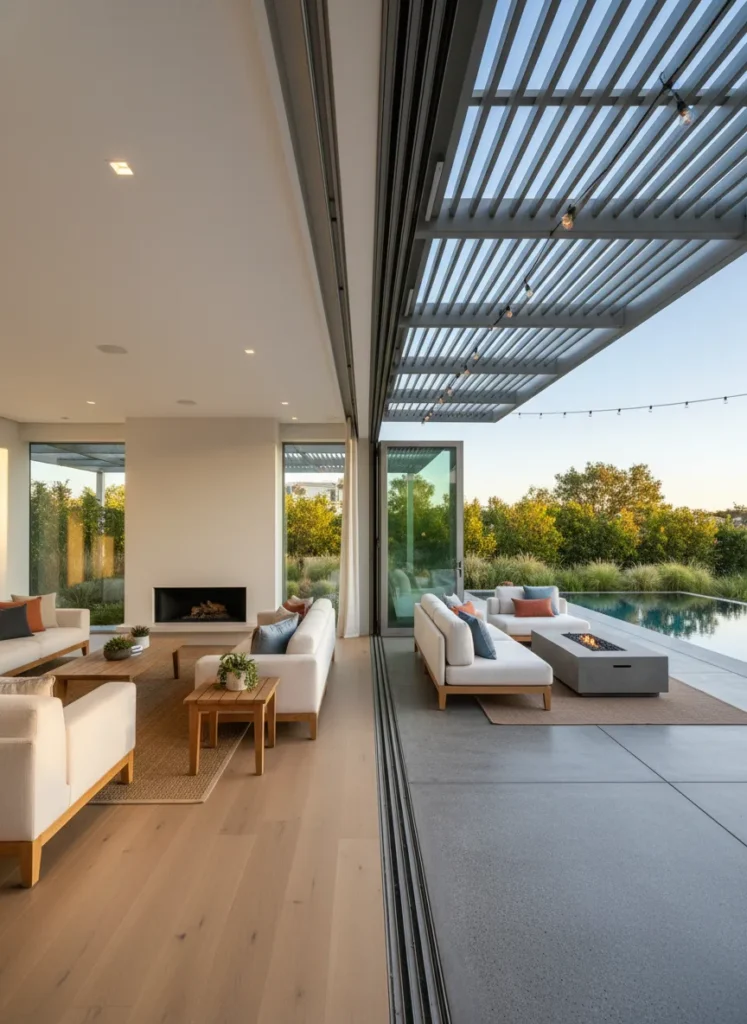
In a small beach cottage, the boundary between interior and exterior space is one of the most important design considerations of all. A well-designed outdoor living area effectively extends the usable square footage of the cottage dramatically, providing additional space for dining, relaxing, entertaining, and simply sitting in the open air — which, for most people, is the primary reason for choosing coastal cottage living in the first place.
The most successful beach cottage outdoor spaces feel like genuine extensions of the interior rather than separate, disconnected areas. This connection is achieved through consistent design language — using similar colors, materials, and furnishing styles both inside and out creates a seamless flow that makes both spaces feel larger and more cohesive. If the interior features natural wood tones, linen textiles, and a soft coastal palette, the outdoor space should echo these choices in its furniture, cushions, and decorative elements.
A covered porch, veranda, or pergola transforms an outdoor area from a pleasant weather-dependent bonus into a genuinely functional all-season living space. Shade from direct sun makes outdoor areas comfortable throughout the heat of summer, while partial protection from light rain extends their usability into shoulder seasons. String lights or outdoor pendant lights create a warm, inviting atmosphere on summer evenings that draws people naturally from the interior to the outdoor space.
Outdoor furniture for a small beach cottage should be durable, low-maintenance, and comfortable enough for extended use. Teak, eucalyptus, and powder-coated aluminum all withstand coastal conditions well and require minimal seasonal maintenance. Cushion covers should be made from outdoor-rated fabric that resists moisture, UV fading, and mildew — qualities that are non-negotiable in a seaside environment. Choose covers that zip off easily for washing, as salt air and summer use mean they will need regular laundering.
Even a modest outdoor area — a small deck, a compact balcony, a simple concrete patio — can be transformed into a genuinely appealing coastal living space with the right furniture, lighting, and planting. A pair of comfortable chairs, a small side table, a string of warm lights overhead, and a collection of potted coastal plants is all it takes to create an outdoor room that adds enormous value to small beach cottage living. In the best cases, this outdoor space becomes the heart of the home — the place where mornings begin over coffee, evenings end over wine, and the most memorable moments of coastal life unfold.
